
Surprising stat to start: nearly every wallet interaction you make with a DeFi app is a form of prediction — you are implicitly predicting what a smart contract will do with your tokens and what fees you’ll pay. Rabby Wallet makes that prediction explicit by running a transaction simulation before you sign, and that changes the risk calculus for power users. For traders and active DeFi participants based in the US, where operational errors and social-engineering scams are common vectors for loss, a dependable simulation layer is not a minor convenience — it’s a measurable security control.
This article walks through a concrete case: a power user preparing a cross-chain swap with layered approvals and a custom gas strategy. I’ll explain how Rabby’s extension-based simulations work, where they help most, what they don’t solve, and the practical trade-offs when you choose Rabby as your primary browser wallet. Along the way you’ll get a reusable heuristic for when to rely on simulated outputs and when to apply additional checks.
The case: complex swap, multiple approvals, cross-chain gas
Imagine you want to swap an ERC-20 token on Ethereum for a token on Arbitrum through a bridge and an AMM, and you have no ETH on Arbitrum to pay gas. The naive sequence is: approve token, call bridge, bridge mints wrapped asset on Arbitrum, swap on Arbitrum. Each step carries distinct risks: malicious or overbroad approvals, front-running or MEV during the bridge call, and insufficient gas on the target chain. Rabby bundles a few mechanisms that directly address those risks: transaction simulation, cross-chain gas top-up, and pre-transaction risk scanning.
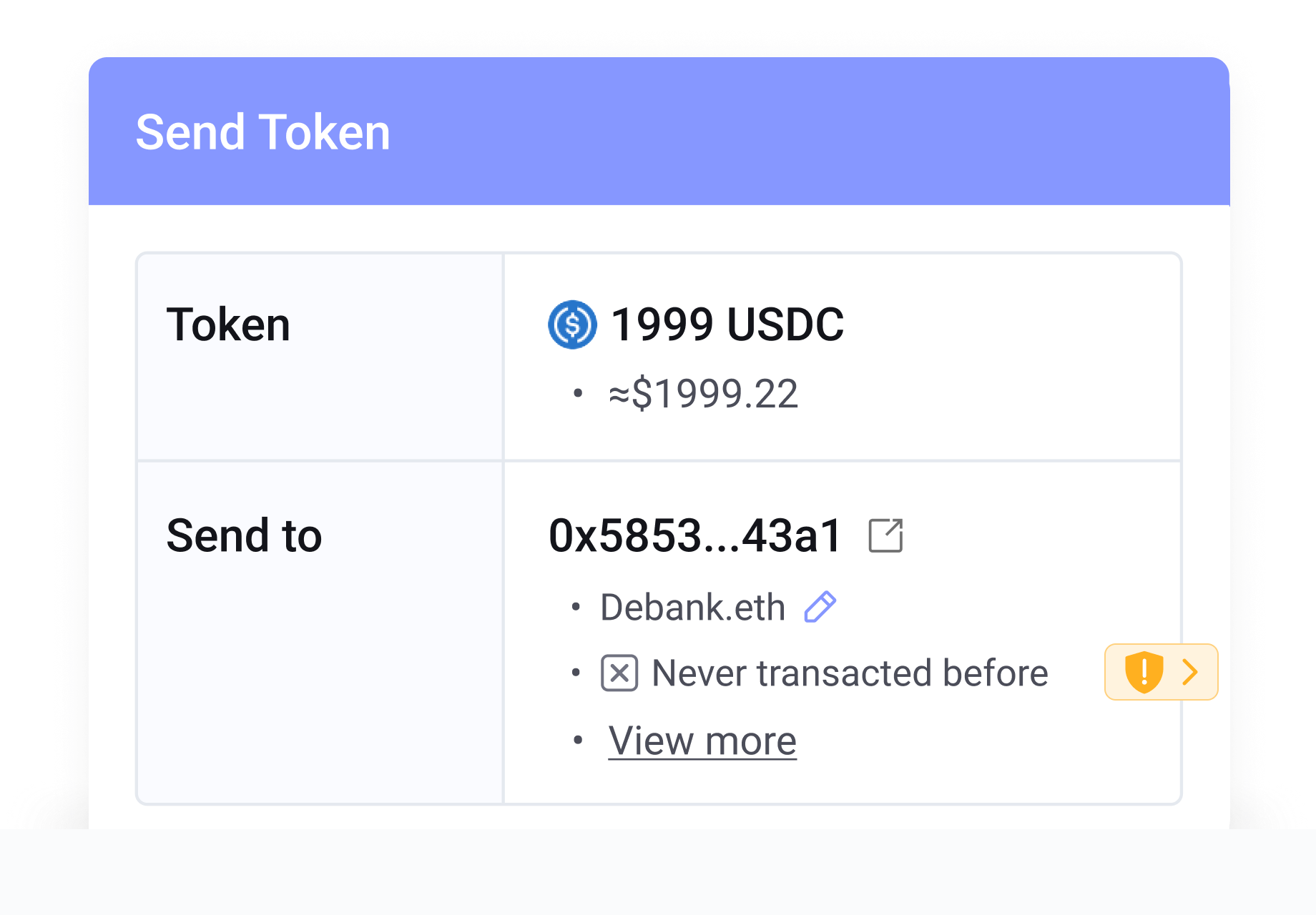
Mechanically, Rabby’s transaction simulation executes a dry-run of the signed transaction against a node or local VM to estimate state changes and gas costs, then presents the expected token balance deltas to the user. That simulation is not a guarantee — it’s an observable projection based on current mempool state and node responses — but it surfaces mismatches between what a dApp’s UX claims and what the chain would record.
How simulation changes decisions — a mechanism-first view
There are three practical effects for a DeFi power user. First, it reduces blind signing: instead of trusting a dApp’s text, you see the machine-readable outcome. Second, it makes fee budgeting explicit: you can compare the simulated gas and the UX’s promised “low gas” claim. Third, when used with approval revocation and the pre-transaction risk engine, it creates layered defenses — you can spot an approval to a contract that would drain funds in the simulation before you allow it.
That layered approach is important because each defense has limits. Simulation depends on the state of the network at execution time; mempool front-running or sandwich attacks may still change outcomes between simulation and inclusion. Pre-transaction scanning relies on signature-based heuristics (previously hacked addresses, known fraud patterns), which can produce false negatives for novel scams and false positives for new contracts. In short: simulation reduces a class of “I didn’t know what I signed” problems but does not make you immune to sequence-of-events attacks or oracle manipulation.
Comparing Rabby to common alternatives
MetaMask, Trust Wallet, and Coinbase Wallet are the familiar incumbents in the EVM wallet space. Rabby differentiates itself on three practical axes: built-in transaction simulation, automatic network switching tied to visited dApps, and a stronger focus on pre-transaction risk signals. For an active DeFi user, automatic network switching removes a frequent source of user error — signing on the wrong chain — while simulation addresses blind signing. That said, Rabby is not a full replacement for institutional controls: it integrates with multi-sig and custody solutions (Gnosis Safe, Fireblocks, Amber, Cobo), but organizations will still want hardware keys and on-chain governance for high-value flows.
Importantly, Rabby is open-source (MIT), which matters for auditability and for the US institutional appetite for observable security practices. But openness is not a panacea; the project has had a known incident in the past (a 2022 exploit of a Rabby Swap contract that resulted in roughly $190,000 in losses). The team’s response — freezing the contract, making users whole, and tightening audits — is a positive signal, but it’s evidence that software plus audits plus responsive processes matter more than any single feature set.
Where Rabby excels — and where it doesn’t
Strengths:
– Transaction simulation: prevents blind signing by displaying expected balance changes and fee costs before confirmation.
– Pre-transaction risk scanning: flags known risky contracts, suspicious approval requests, and non-existent recipients.
– Approval revocation: lets users cancel token approvals from the extension — a direct, usable mitigation against approval-based drains.
– Multi-chain breadth: supports 90+ EVM chains and offers cross-chain gas top-up to handle gas-less target chains.
– Hardware and institutional integrations: works with Ledger, Trezor, Keystone, and multi-sig/enterprise custody systems.
Limitations and trade-offs:
– No built-in fiat on-ramp: US users accustomed to buying crypto with bank rails will need an external on-ramp.
– No native in-wallet staking: if you need one-click staking, Rabby won’t replace staking dashboards.
– Simulation is imperfect: it’s a projection based on current node state and can be invalidated by rapid mempool changes or oracle state shifts before inclusion.
– Browser extension surface: extensions reduce friction but increase the attack surface compared with isolated hardware-only workflows; pairing with a hardware wallet mitigates this, but it changes UX and speed.
A practical heuristic for when to trust the simulation
Use this three-step rule when the dollar value at risk is meaningful: 1) Run the simulation and inspect the balance deltas. If the delta matches the UX and your intended amounts, proceed to step 2. 2) Check the pre-transaction warnings: any flagged approval, unknown recipient, or hacked-contract alert requires you to pause and investigate. 3) For multi-step, multi-chain flows or approvals exceeding a typical trade size, prefer hardware signing or a Gnosis Safe flow even if simulation looks normal. This heuristic balances speed and safety: simulations for routine swaps; hardware/multi-sig for large or irreversible flows.
Operational recommendations for US-based DeFi users
– Pair Rabby with a hardware wallet for large-value accounts. Rabby’s hardware integration is broad, but the extension + device combo reduces phishing risk compared with seed phrase import into a hot extension.
– Use the built-in revocation tool periodically. Many losses trace back to stale approvals; revocation is a low-friction prophylactic.
– Keep a small chain-specific gas reserve or use Rabby’s cross-chain gas top-up. Running out of gas on a target chain is a common friction point and can cause failed transactions that expose you to repeated gas costs attempting retries.
– Treat simulation output as necessary but not sufficient. For example, if a simulation shows a token transfer to a contract you don’t recognize, pause and verify the contract address externally; don’t assume the simulation’s pass/fail status is an endorsement of the dApp’s intent.
What to watch next (conditional signals, not predictions)
Three signals could materially affect the value of a simulation-first wallet like Rabby. One: improvements in mempool privacy or private transaction relays that narrow the window between simulation and inclusion would make dry-runs more predictive. Two: broader adoption of standardized contract metadata (machine-readable intent for approvals) would let wallets interpret intent with higher fidelity and reduce false positives. Three: regulatory pressure in the US on wallet providers to implement KYC/AML features could change the open-source, non-custodial model incentives for browser extensions; how projects respond will matter for privacy and functionality. These are conditional scenarios — useful to monitor rather than certain outcomes.
Frequently Asked Questions
Does Rabby’s simulation stop phishing or smart-contract exploits entirely?
No. Simulation reduces blind signing by showing expected balance changes and fees, but it cannot prevent all attacks. Sequence-of-events attacks (MEV, front-running), oracle manipulation, or exploits in third-party contracts can still produce unexpected outcomes between simulation and on-chain inclusion. Simulation is a strong but partial control — combine it with hardware signing, revocation hygiene, and external contract verification for high-value operations.
Can I use Rabby for institutional or multi-sig workflows?
Yes. Rabby integrates with multi-signature and enterprise solutions such as Gnosis Safe, Fireblocks, Amber, and Cobo Wallet. For institutions, that integration plus hardware custody and formal approval policies will remain essential; Rabby’s simulation and scanning features add an extra layer of actionable information but do not replace governance controls.
How reliable are the token balance deltas shown in simulation?
Generally reliable as a snapshot given current node and mempool state. They accurately reflect the simulated execution path at the time of the dry-run, but they can be invalidated by subsequent mempool reordering, differing miner incentives, or off-chain state changes (like oracle updates) before block inclusion. Treat them as strong signals, not guarantees.
Is Rabby a good replacement for MetaMask?
Depends on priorities. For DeFi power users focused on transaction clarity and pre-transaction risk signals, Rabby’s simulation, automatic network switching, and approval revocation are meaningful advantages. MetaMask remains widespread and integrated across many dApps. A common practical posture is to keep both available and use Rabby for high-risk or high-value flows.
Where to learn more and a final decision-useful takeaway
If you want to test the experience, the practical next step is to install the browser extension, connect a hardware wallet, and try a small-value simulated flow where you intentionally compare the dApp’s UI and Rabby’s simulation output. For readers exploring that path, this resource is a concise place to start: rabby wallet.
Takeaway heuristic: use simulation to lower cognitive load and reduce accidental loss, but treat it as one element in a defense-in-depth strategy. When dollars or reputational risk are material, combine Rabby’s simulation with hardware keys and multi-sig workflows — that blend gives you speed most of the time and robust protections when you need them.